
Nineveh
A biblical city. A surviving tablet. A later artist’s Jonah.
Read the city and its sourcesLocate NinevehA story can be read. A tablet can be turned in the hand.
The ground beneath the stories. Places, civilizations, journeys and the material things that remain.
Read the atlas collection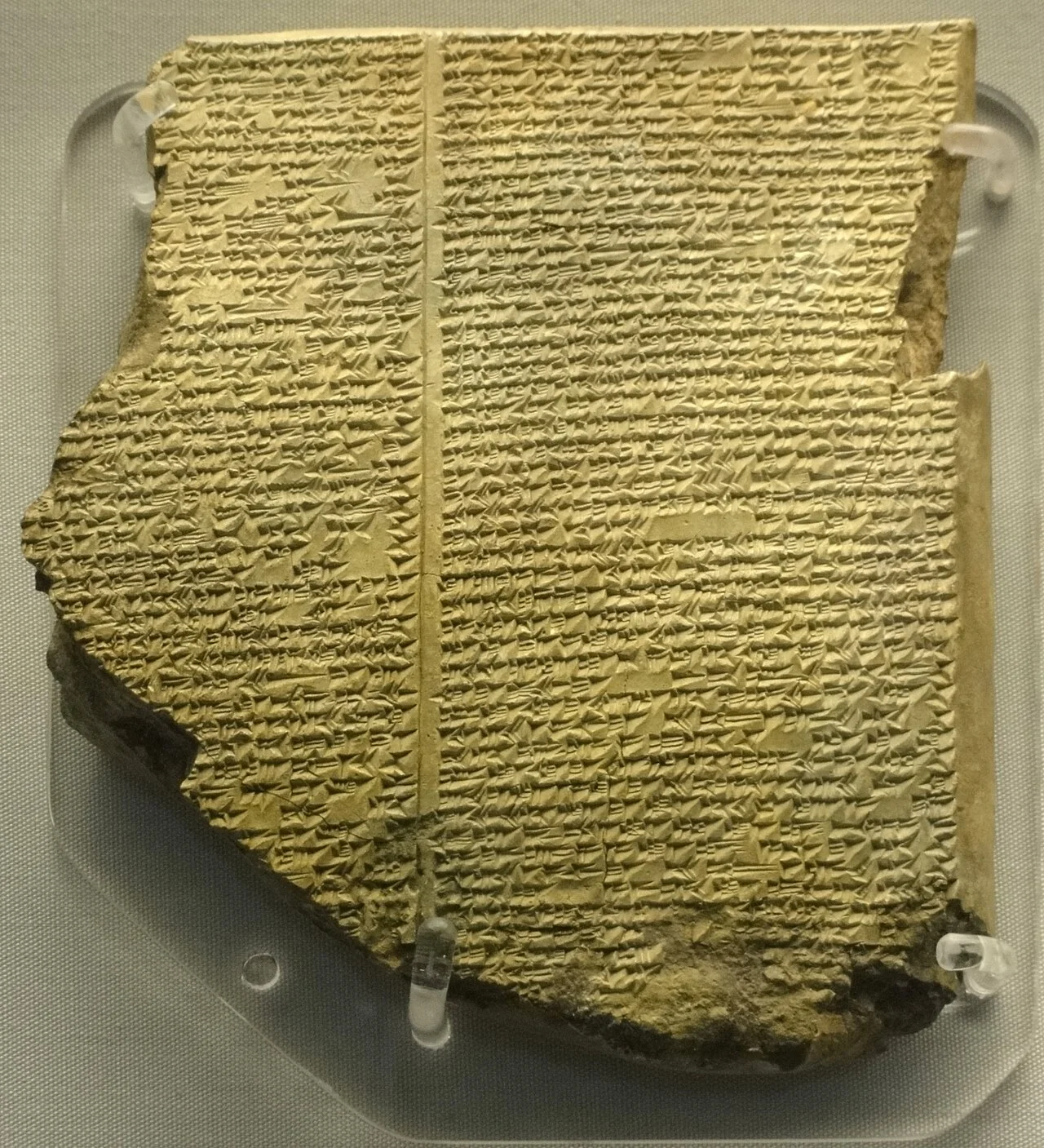
Seventh century BCE. British Museum.
Excavated evidence of literary culture in seventh-century BCE Nineveh. Does not date or verify Jonah’s visit, or establish literary dependence.
Broken clay tablet on a modern mount, covered with rows of wedge-shaped cuneiform marks in two columns.
Unknown scribe; Neo-Assyrian culture. Photograph by Fæ, 15 July 2010.
Excavated by Hormuzd Rassam at Kouyunjik, Nineveh, per British Museum record.
The Flood Tablet, British Museum K.3375. Photo: Fæ / Wikimedia Commons, CC BY-SA 3.0; converted to WebP.
Independent photograph by Fæ, licensed CC BY-SA 3.0. WebP conversion by BibleMap, full frame retained; derivative under the same license. No British Museum photograph reproduced.
Start with a city, then choose a time and an account. These are city-scale orientations, not reconstructed historical routes.
A biblical city. A surviving tablet. A later artist’s Jonah.
Read the city and its sourcesLocate NinevehTacitus’s imperial account and a chapel ceiling in another age.
Read across the centuriesOrient to RomePerpetua’s Passion and Augustine’s remembered city.
Read Perpetua & FelicityOrient to CarthageRome and Carthage coordinates: Roma, Pleiades 423025 (L. Quilici, S. Quilici Gigli and contributors); Carthago, Pleiades 314921 (R. B. Hitchner and contributors). CC BY 3.0; representative points rounded for orientation. Nineveh retains the existing sourced Atlas location.
Augustine remembers Ambrose, Monica and hymns
Autobiography & memoryLate fourth-century Milan, remembered around 400 CE
Read the accountMichelangelo's Creation of Adam
Art & receptionc. 1511 · Renaissance Rome, not a date for creation
Read the accountRome and Carthage as places of human lives
Geography & chronologyMultiple periods · orientation, not a single reconstruction
Read the accountMoses and a people on the move
ScriptureExodus 14 · historical dating and route not fixed here
Read the accountNineveh, writing and a surviving tablet
Material evidenceSeventh century BCE · tablet; biblical visit not dated
Read the accountEach reading opens into other worlds. Follow its connections to a person, a place, another text or a later work.
Explore paths across the five worlds