James: The Brother Who Remained
A brother of Jesus. A leader in Jerusalem. A life in surviving voices.
Historical testimonyFirst-century Jerusalem; death around 62 CE (inferred); later Christian memory
Read the accountRead what an official asks when lives are in his hands.
Jesus and the biblical world in other people's records. Friendly, hostile, fragmentary and disputed.
Read the witnesses collection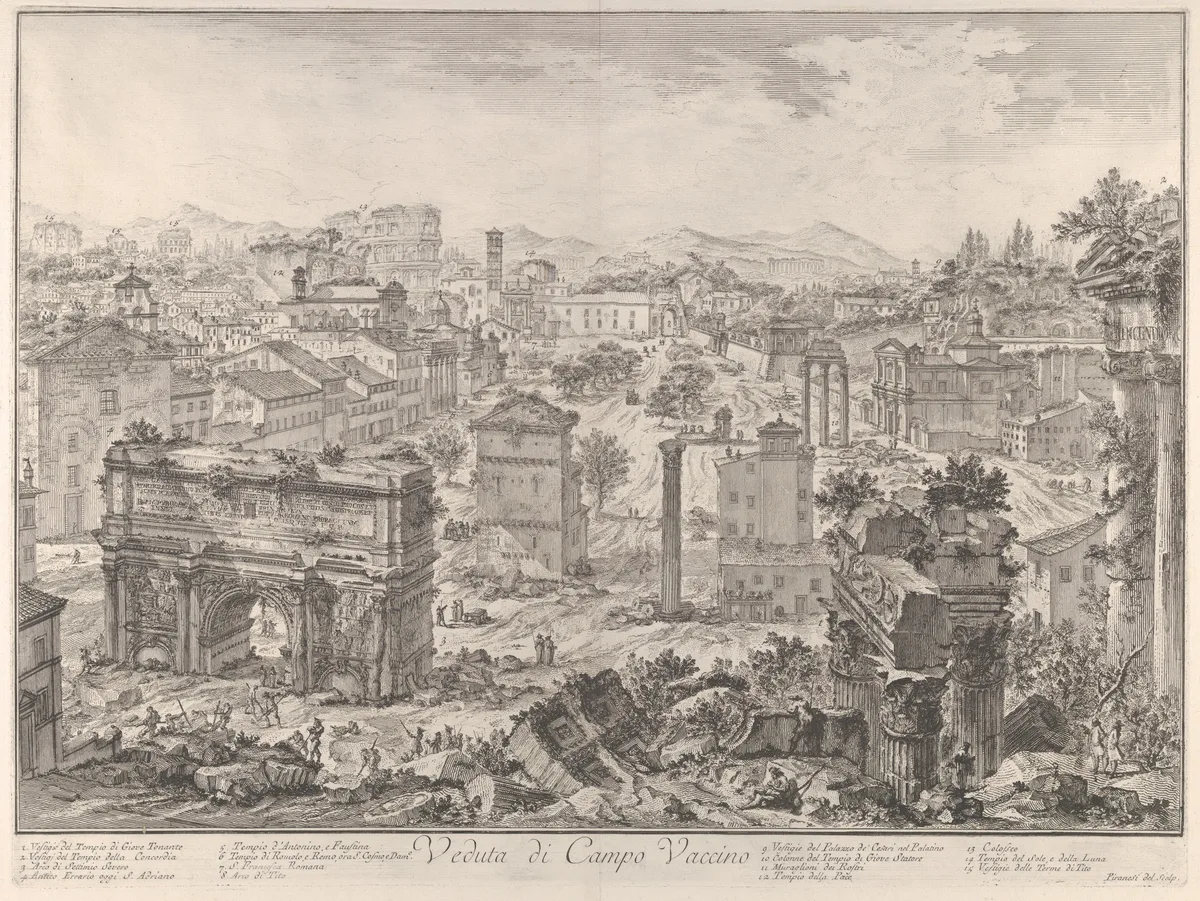
Piranesi, Roman Forum, ca. 1775. A later view of the Roman world’s remains.
An eighteenth-century view, not an eyewitness image of ancient Rome. Pliny wrote the letters shown here from Bithynia, not this location.
Giovanni Battista Piranesi / The Metropolitan Museum of Art, Harris Brisbane Dick Fund, 1937. 37.45.3(58).
ca. 1775
Open the complete imageBithynia · early second century · two Roman officials
Pliny has already punished people. He writes to ask how to proceed. Read his practice beside the limits Trajan places on it.
In the meanwhile, the method I have observed towards those who have been brought before me as Christians is this: I asked them whether they were Christians; if they admitted it, I repeated the question twice, and threatened them with punishment; if they persisted, I ordered them to be at once punished:
It is not possible to lay down any general rule for all such cases. Do not go out of your way to look for them. If indeed they should be brought before you, and the crime is proved, they must be punished;
with the restriction, however, that where the party denies he is a Christian, and shall make it evident that he is not, by invoking our gods, let him (notwithstanding any former suspicion) be pardoned upon his repentance. Anonymous informations ought not to be received in any sort of prosecution.
What does “do not go out of your way” change—and what does it leave in place?
Melmoth / Bosanquet translation, public domain. Letters 10.96–97 (XCVII–XCVIII in the linked edition). This correspondence is earlier than Perpetua’s trial and comes from another province.
| Account | Its subject | Its limits |
|---|---|---|
| TacitusAnnals 15.44 | Christus, Nero and punishment at Rome | Hostile retrospective account; information source not named. |
| Pliny & TrajanLetters 10.96–97 | A governor's procedure and reported worship | Interrogations and coercion; not an account of Jesus's lifetime. |
| Josephus: JamesAntiquities 20.200 | James's death and Ananus's authority | A brief notice in political history; distinguish book 18. |
| The TestimoniumAntiquities 18.63–64 | The received passage about Jesus | Wording and transmission disputed; no uncontested resurrection proof. |
| SuetoniusClaudius 25.4 | Disturbances and expulsion from Rome | The identification of Chrestus is disputed. |
A brother of Jesus. A leader in Jerusalem. A life in surviving voices.
Historical testimonyFirst-century Jerusalem; death around 62 CE (inferred); later Christian memory
Read the accountCodex Sinaiticus and the work of preserving a text
Manuscript witnessFourth century CE · the copy's date, not the events' date
Read the accountA prison, two mothers and a layered account
Autobiography & memoryCarthage, traditionally dated 203 CE · composite Christian Passion
Read the accountA hostile historian looks back
Historical testimonyEarly second-century account · events in Nero's reign
Read the accountWhat should Rome do with Christians?
Historical testimonyTrajan's reign · Letters 10.96–97
Read the accountOne brief notice inside a political dispute
Historical testimonyLate first-century history · earlier events under Ananus
Read the accountJosephus, Jesus and the Testimonium Flavianum
Historical testimonyAntiquities 18.63–64 · received wording disputed
Read the accountA short sentence with an unsettled identification
Historical testimonyEarly second-century account · Claudius 25.4
Read the accountEach reading opens into other worlds. Follow its connections to a person, a place, another text or a later work.
Explore paths across the five worlds